
First Date at the Art Institute of Chicago on a Wednesday Afternoon, or What Is Love, if Not Finding Someone with Whom Your Soul Can Dance: A One Act Play
Playwright: Molly Livesay | Directed by Molly Livesay and Mia Luparello

Mia Luparello
Production Dramaturg
Table of Contents
Artworks Included
Currently on View at Art Institute of Chicago
Currently not on View at Art Institute of Chicago
Not at Art Institute of Chicago
Media References and Impersonations
Vaguely European Accent
Zoolander
Star Wars; Jedi Mind Trick
The Dark Night Rises: Bane
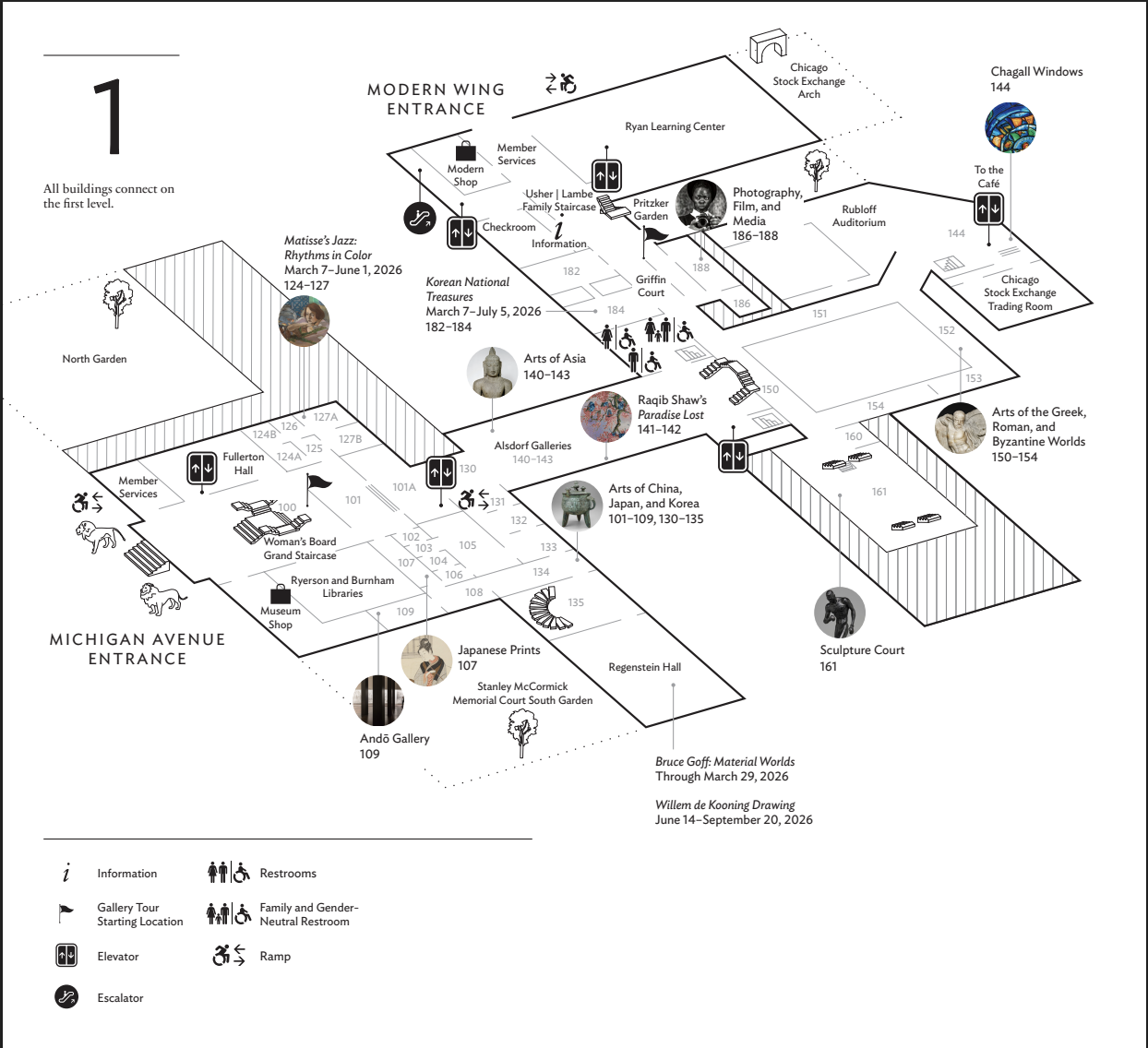
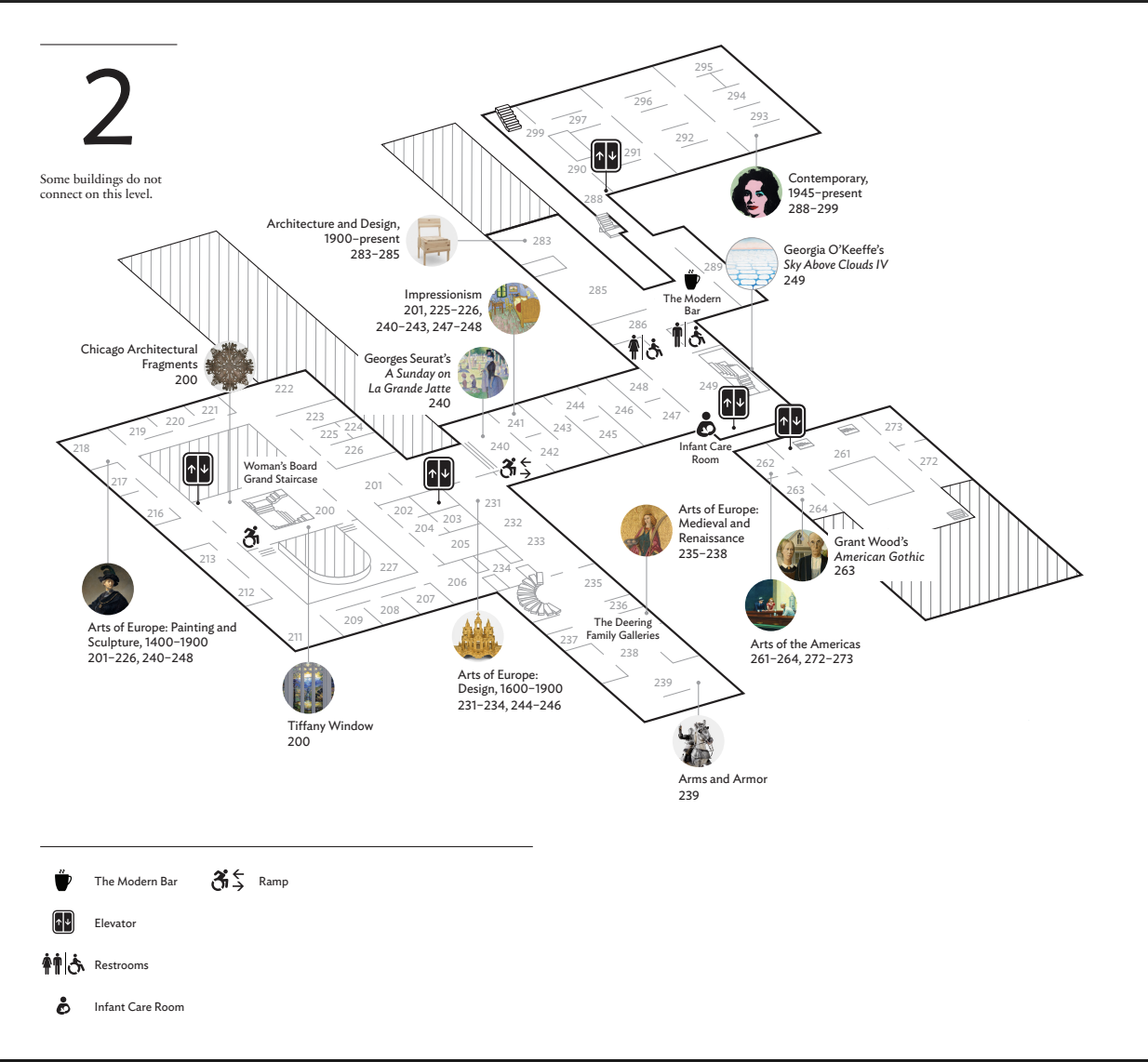
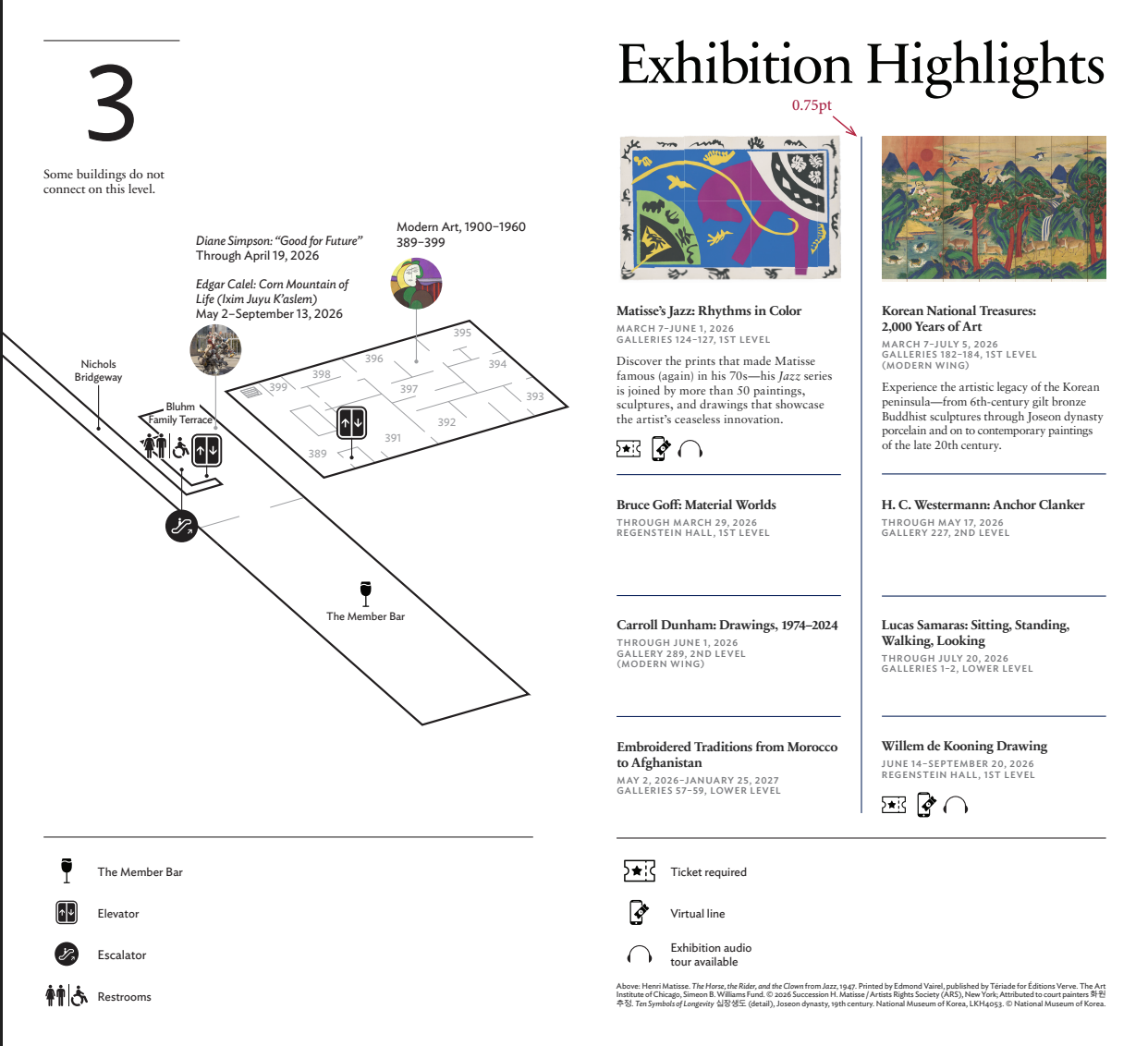
Art Institute of Chicago Layout
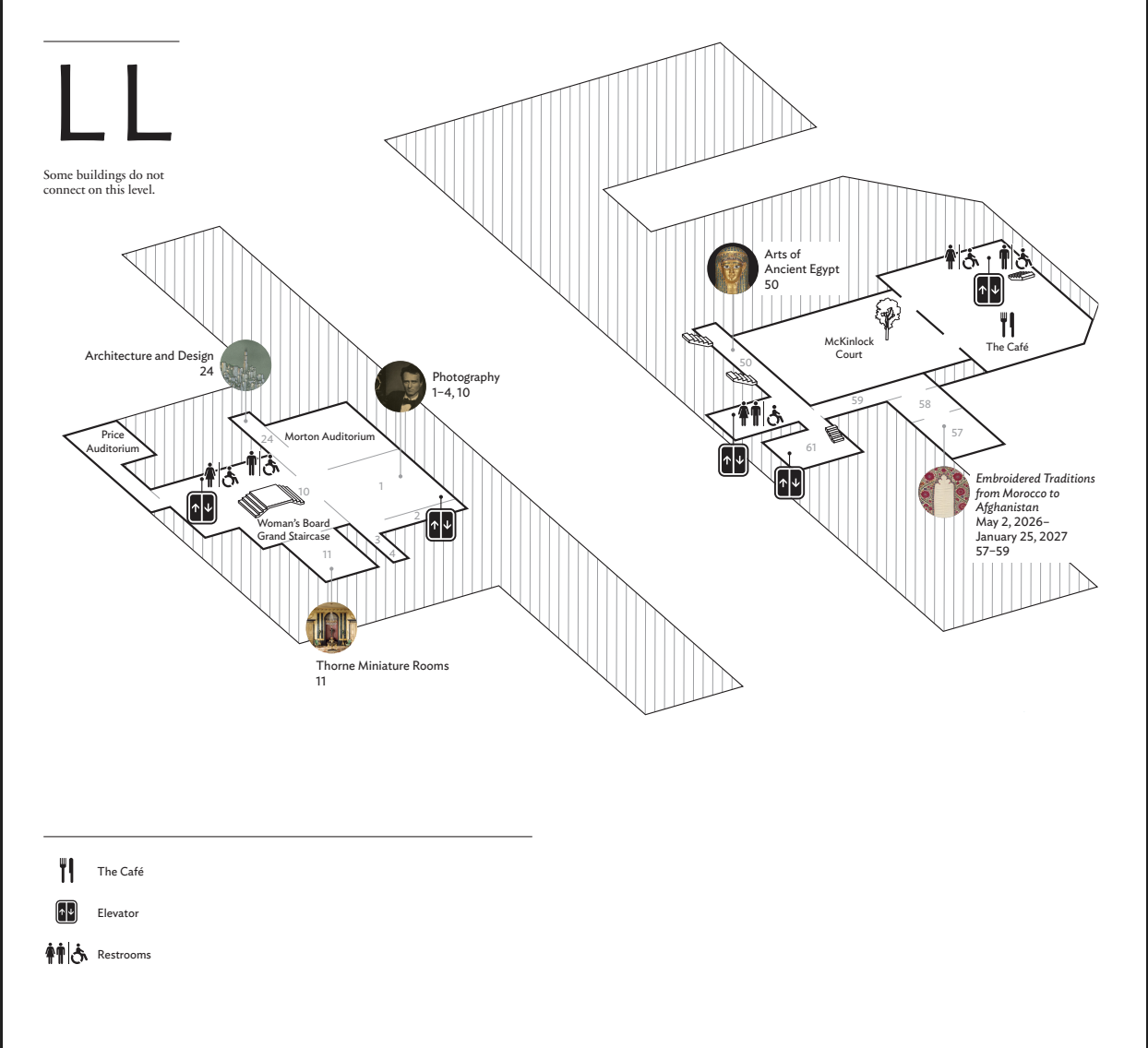
Lower Level
First Level
Second Level
Third Level
The Guardian Lions (1893) by Edward Kemeys: Michigan Avenue Entrance
Thorne Miniature Rooms (1930-194?) by Narcissa Niblack Thorne: Lower Level, Gallery 11
A Sunday on La Grande Jatte (1884-1886) by Georges Seurat: Second Level, Gallery 240
Untitled #86 (1981) by Cindy Sherman: Second Level, Gallery 296
Untitled (girlfriend) (2000) by Richard Prince: Second Level, Gallery 296
Locations of the on view artworks included:
The Tune and Also the Words (1964) by Rene Magritte: Third Level, Gallery 397
American Gothic (1930) by Grant Wood: Second Level, Gallery 263
The Old Guitarist (1903-1904) by Pablo Picasso: Third Level, Gallery 391
Head of Medusa (1801) by Antonio Canova: Second Level, Gallery 219
Untitled (Purple, White, and Red) (1953) by Mark Rothko: Second Level, Gallery 291
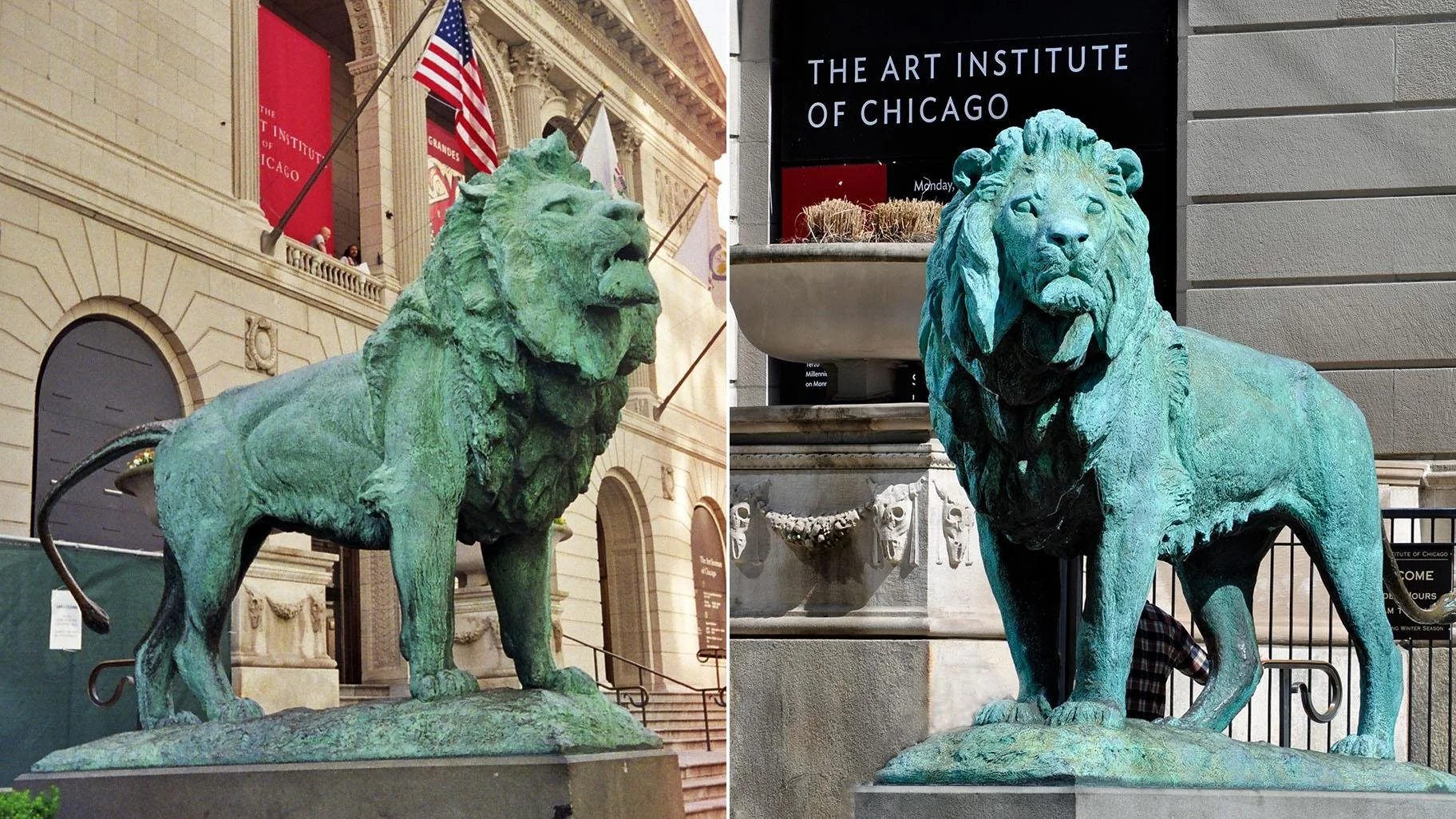
Edward Kemeys
American, 1843-1907
In an Attitude of Defiance (north pedestal) and On the Prowl (south pedestal), 1893
Bronze
Edward Kemeys was a self taught American sculptor. He considered to be the first American great sculptor of animals, also known as an animaler. Kemey’s worked tended to focus on portrayals of North American wildlife, but in these works, he focused on African wildlife. The titles, “In an Attitude of Defiance” and “On the Prowl,” suggest an active, offensive role of the lion figures, thus supporting their duty as guardians of the museum. The site of the museum has been it’s permanent location since the museum hosted several events at the World’s Columbian Exposition in 1893. The lion pair was unveiled on May 10, 1894.
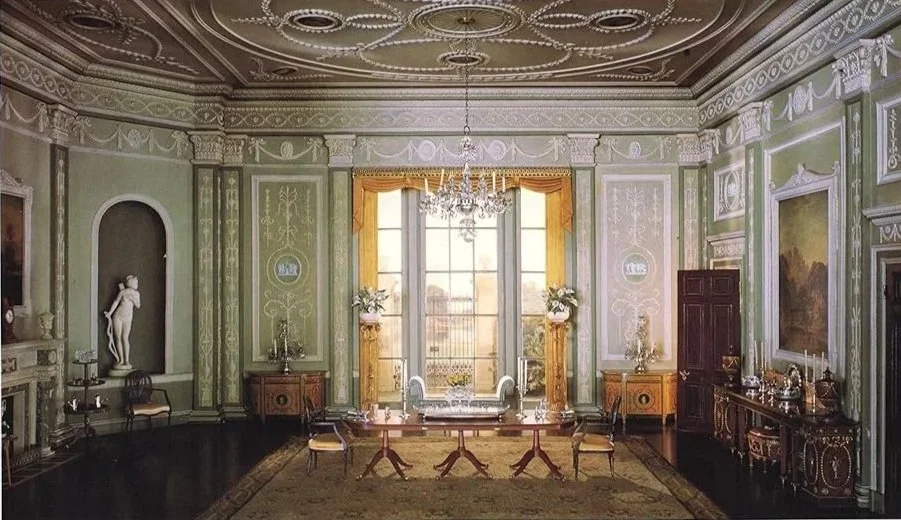
English Dining Room of the Georgian Period, 1770-90 (c. 1937)
Narcissa Niblack Thorne
American, 1882-1966
Thorne Miniature Rooms, year created
Mixed Media
68 rooms created by Thorne and her team. 1930s: began assembling group of artisans in Chicago to create series of miniature rooms (scale= 1:12) record history of interior design while also creating fantastical, inspiring feeling. was not a fan of Modernism—very few rooms include modern interior design (example: California Hallway c. 1940 [c.1940]). most rooms were domestic spaces—rarely public spaces (ex. English Roman Catholic Churn in the Gothic Style, 1275-1300 [c.1937]). hated mass produced cooking furniture- calling them “packing box furniture”. particularly loved the classical style of the 18th century (especially English and French interiors). their beauty meant to captivate audience of the 1930s undergoing the Great Depression. America’s colonial past as a simpler time uncomplicated by industry/urbanization. no human figures in any of the rooms—IMAGINATION. traveled widely throughout England and France to understand their interior histories and cultural makeup. teaching tools for design history. miniature versions of “period rooms” popular in European and American museums at the time. felt “sophisticated taste” was lacking in Chicago at the time. one Chinese and one Japanese interior of the 68 rooms—acknowledgment of non-Western influence of American modernist. commissioned Chinese carvers to aid in the creation of the screens and fretwork. STYLE AND TASTE
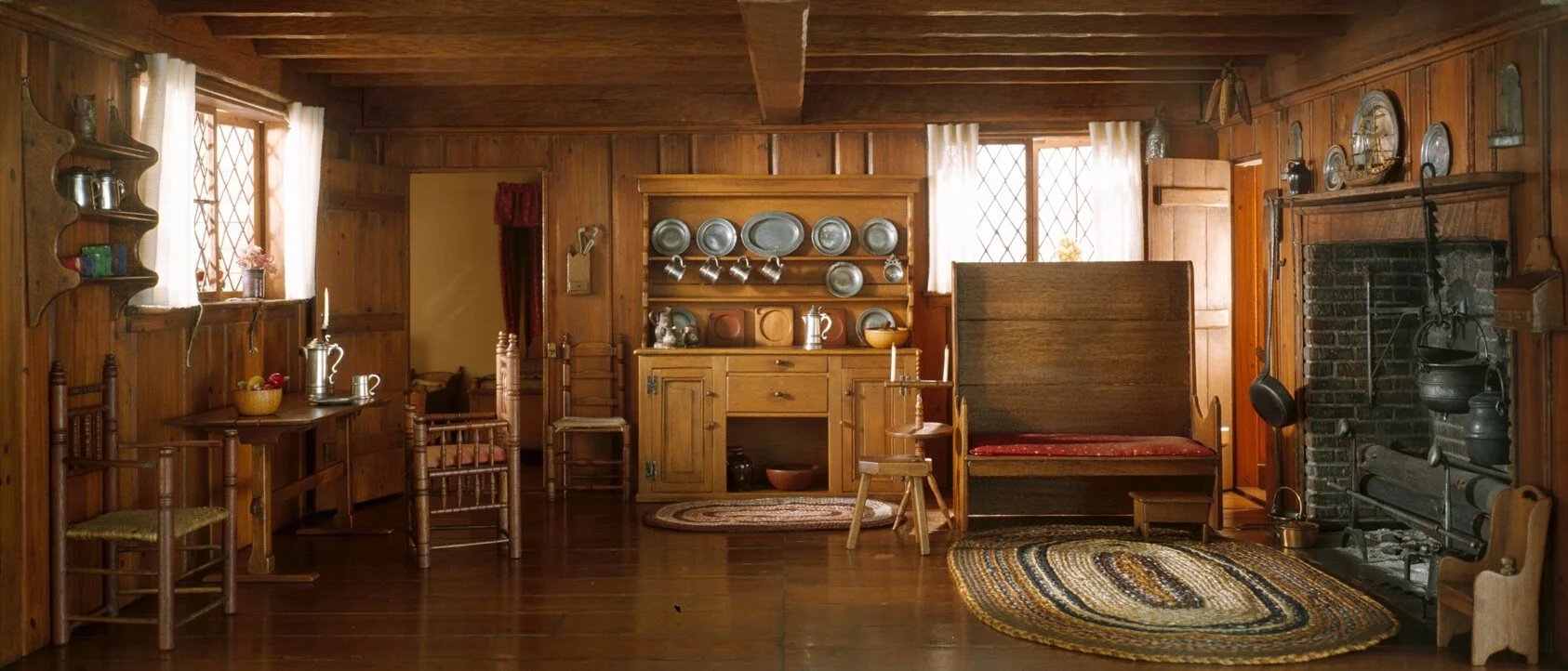
English Dining Room of the Georgian Period, 1770-90 (c. 1937)
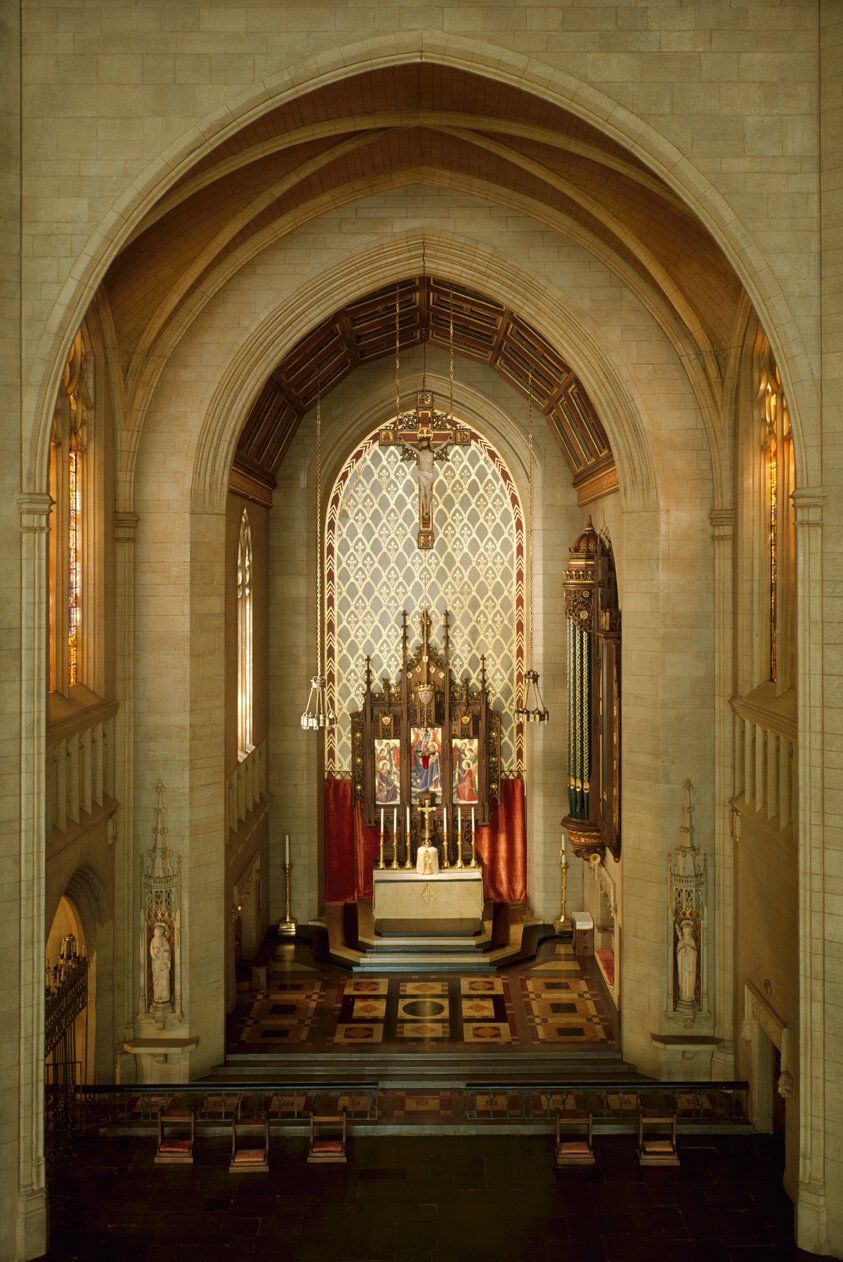
English Roman Catholic Churn in the Gothic Style, 1275-1300 [c.1937]
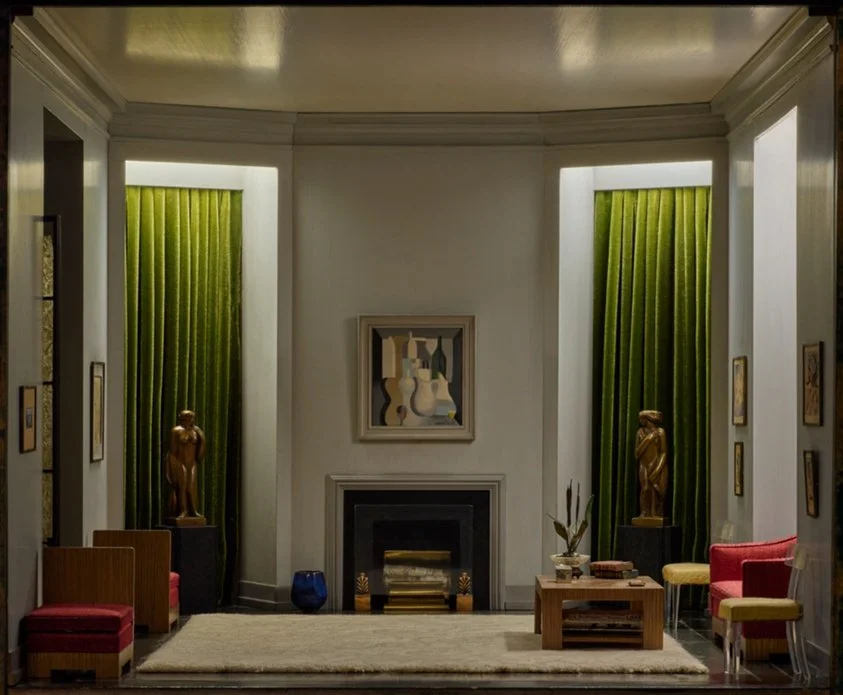
California Hallway c. 1940 [c.1940]
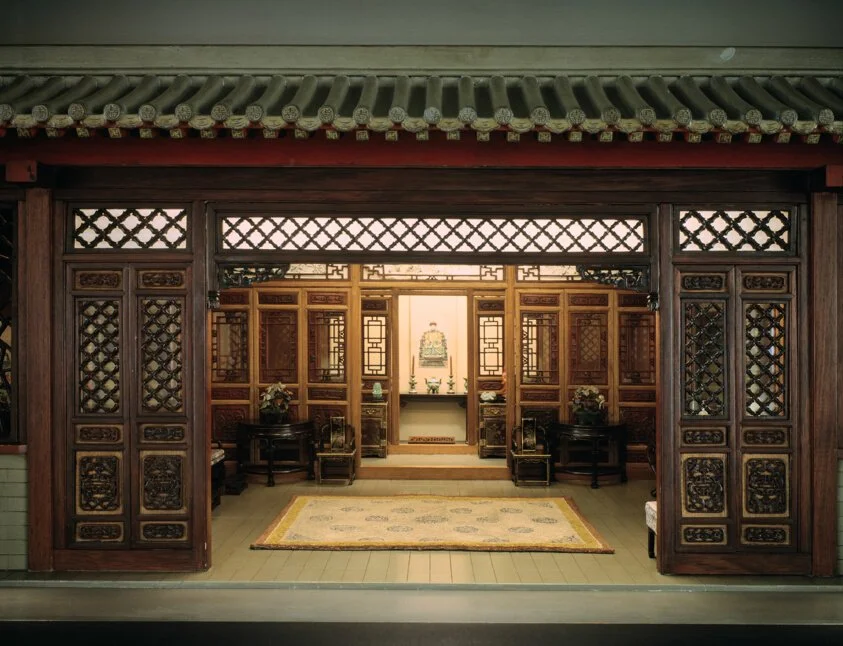
English Dining Room of the Georgian Period, 1770-90 (c. 1937)
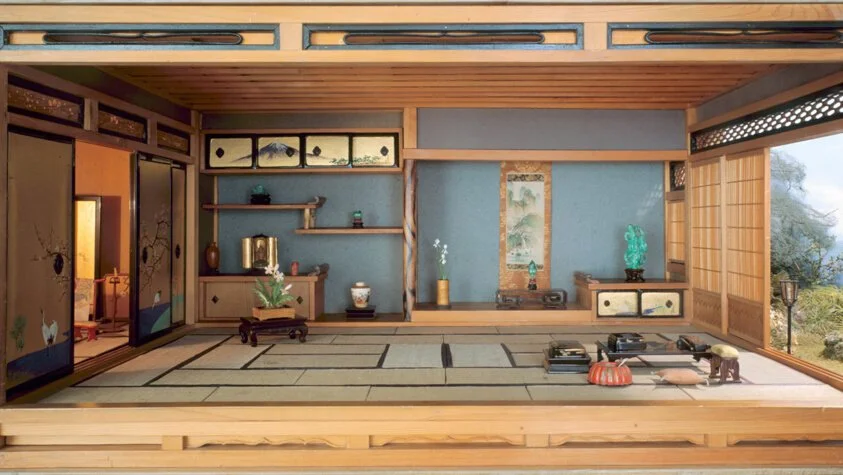
English Dining Room of the Georgian Period, 1770-90 (c. 1937)
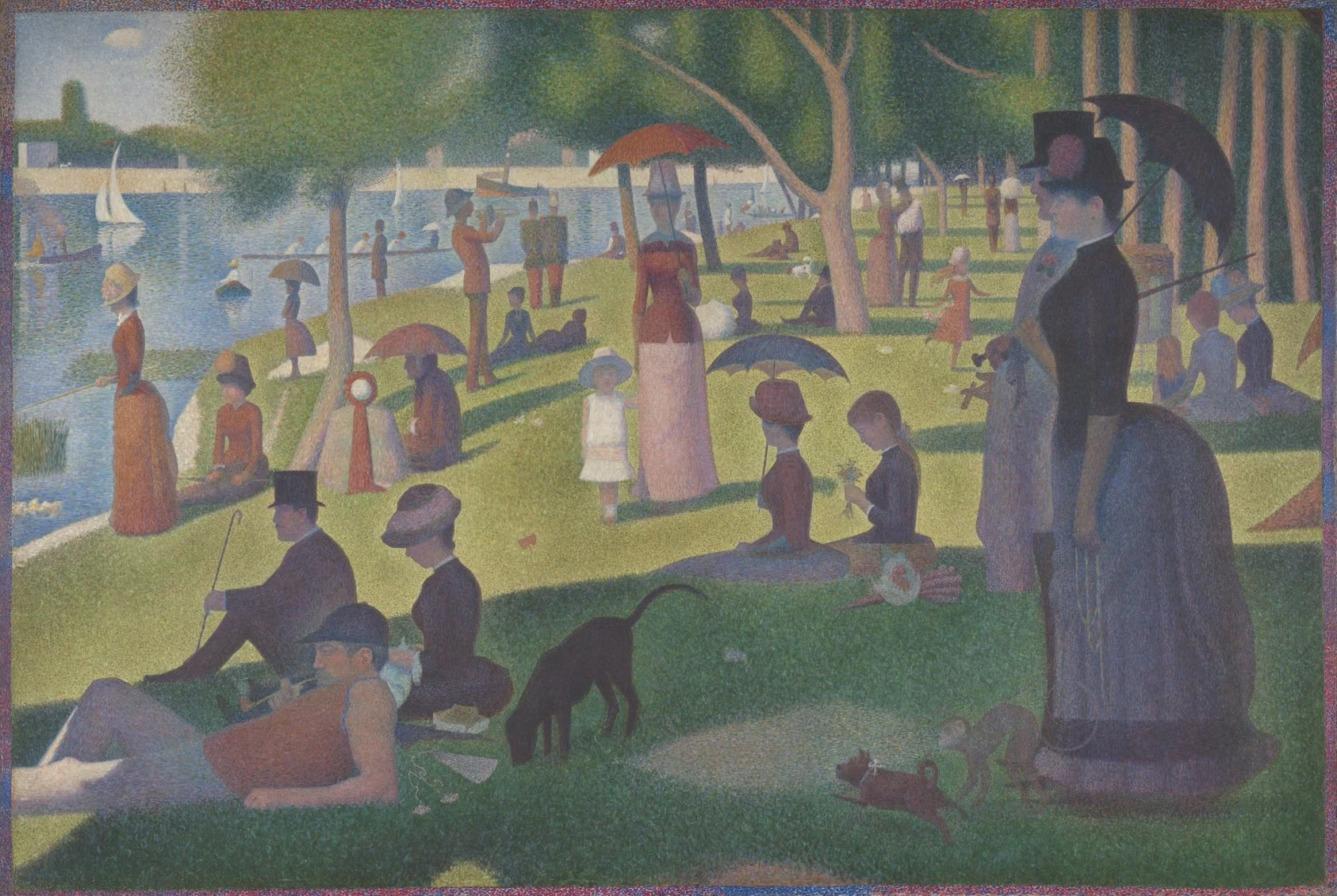
Georges Seurat
French, 1859-1891
A Sunday on La Grande Jatte, 1884-1886
Oil on Canvas
Seurat’s best know and largest painting
-different social classes all relaxing in a park on La Grande Jatte, and island in the Seine River west of Paris
-pointillism: a highly systematic and scientific technique based on the hypothesis that closely positioned points of pure color mix together in the viewer’s eye
-began in 1884 with small horizontal brushstrokes in complementary colors and then added the series of dots
-bordered added sometime before 1889
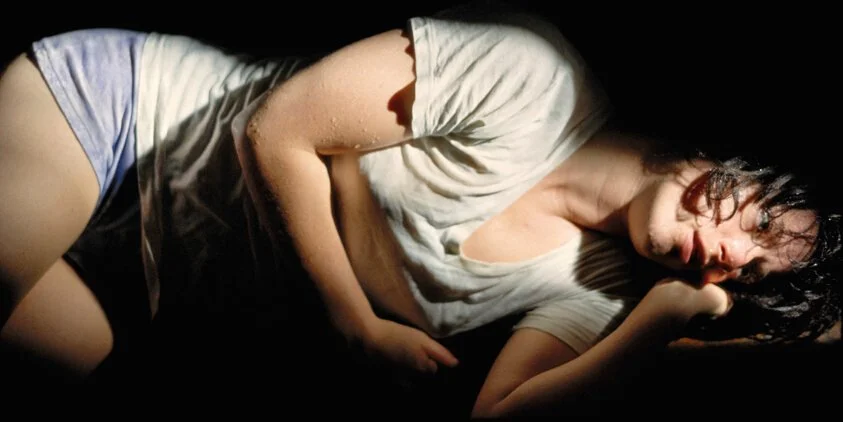
Cindy Sherman
American, born 1954
Untitled #86, 1981
Chromogenic print
Sherman was major figure in the Pictures Generation, a group of artists that emerged in the 1970s and 1980s whose works were united by the appropriation of images from mass media. They utilized images from television, film, and advertising to produce works in a wide range of styles, including photography, film, video, and performance. The 1977 exhibition "Pictures" at Artists Space in New York, curated by Douglas Crimp, was a critical event in defining the movement. Sherman rose to prominence in the late 70s/early 80s with a series of 69 photographs called “Untitled Film Stills.” In this series, Sherman depicts herself as various feminine figures such as film archetypes and female stereotypes. Through a combination of costumes, set designs, makeup, and wigs, Sherman transforms herself into housewives, coquettes, schoolgirls, vamps, damsels in distress, and bombshells. The images are shot in dramatic, cinematic angles that reference film noir. “Untitled Film Stills” challenges the portrayal of women in the media.
In Untitled # 86, the lighting emphasizes the contours of the body while the background remains dark. The image’s tone in vulnerability and underlying tension, seen in the disheveled hair, ambiguous expression, and head turned towards the camera, show how Sherman further explores themes of gender, identity, and gender roles in society, which are all prominent themes in her body of works.
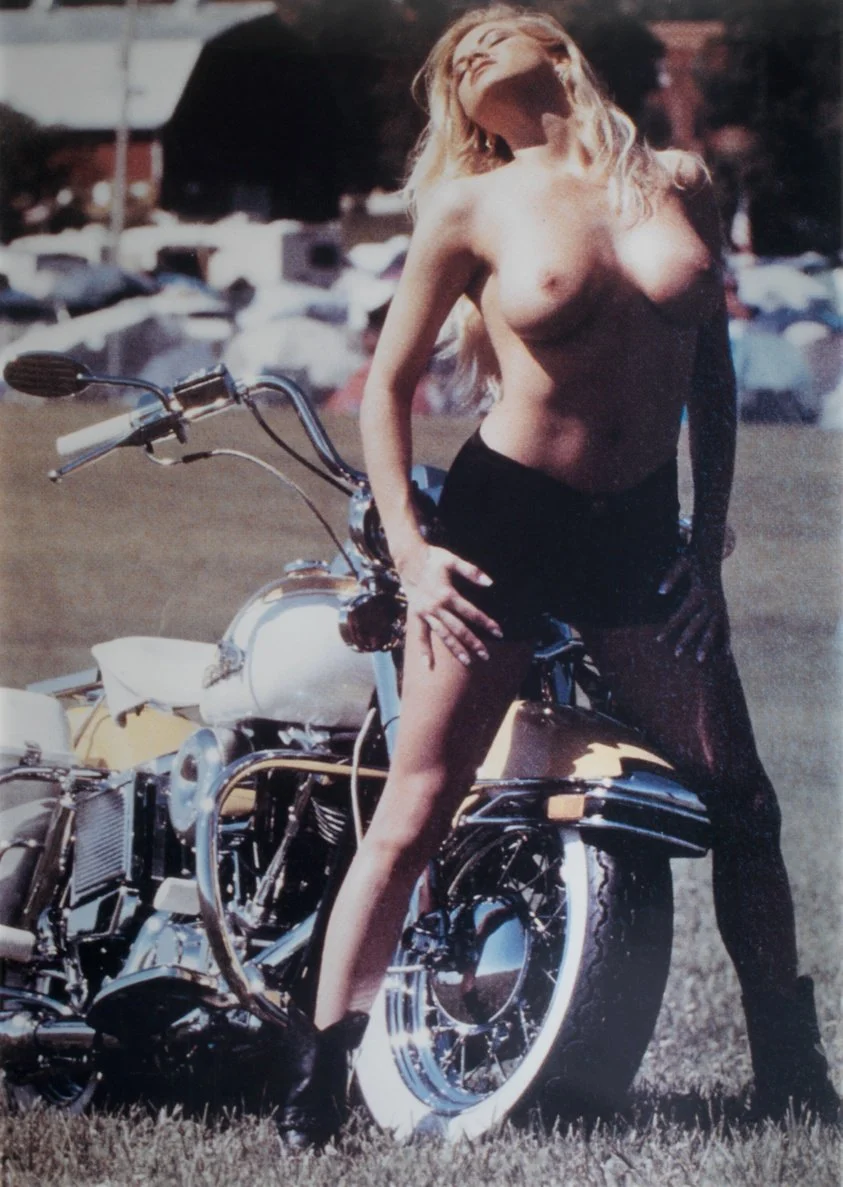
Richard Prince
American, born 1949
Untitled (girlfriend), 2000
Chromogenic print
Prince was an American pop artist born in the Canal Zone in Panama. In the 1970s, he was working for staff writers at Time-Life Inc. While working for these staff writers, Prince would clip articles from magazines, thus he was looking at advertisements featuring luxury goods and perfect models. Prince began rephotographing these images using techniques such as blurring, cropping, and enlarging. As a result, Prince revealed these images as hallucinatory fictions of society’s desire’s
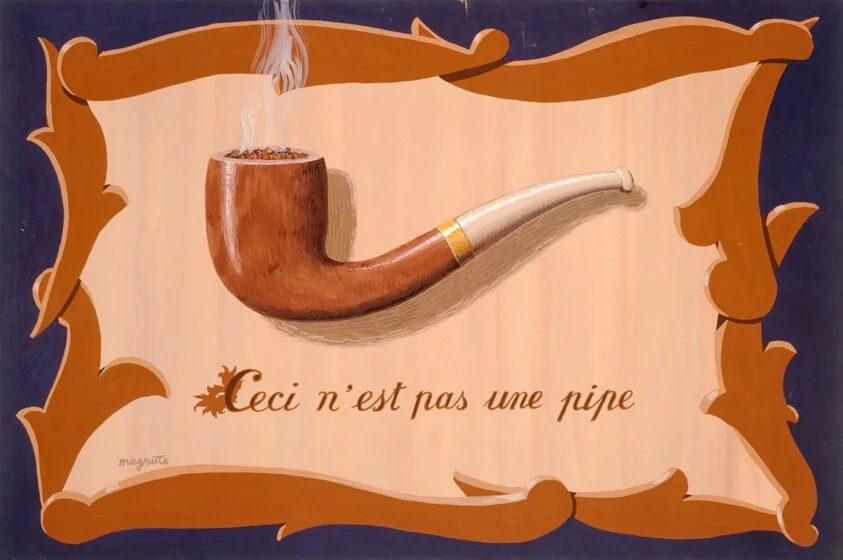
Rene Magritte
Belgian, 1898-1967
The Tune and Also the Words, 1964
Gouache over traces of graphite on cream wove paper
Magritte was a key artist in the Surrealist movement, a literary, artistic, theatrical, and overall cultural movement of twentieth century that was founded by André Breton in 1924. The Surrealist movement’s goal was to express the unconscious mind, and these artists often experimented with automatic techniques to portray this state of subconsciousness. They were heavily influenced by the psychoanalytic theories of Sigmund Freud. Magritte was a part of the Belgian branch of Breton’s Surrealist group. The Belgian branch was characterized as being more practical than the other circles of Surrealists. Magritte, like many of the surrealists, was influenced by Sigmund Freud’s theories on psychoanalysis. In many of his works, Magritte used familiar objects and created spatially illogical situations, dreamlike scenes, and visual puns to create a sense of the uncanny. Magritte’s use of familiar objects shows his interest in portraying the subconscious, as it is through this sense of the uncanny that Magritte defamiliarizes the viewers conception of these objects. Magritte’s desire to create a sense of unfamiliarity in his works to engage the viewer’s subconscious shows his role as a Surrealist artist.
In The Tune and Also the Words, Magritte revisits his 1929 work titled The Treachery of Images, but this time, using gouache rather than oil on canvas. “Ceci n’est pas une pipe” which translates to “This is not a pipe”
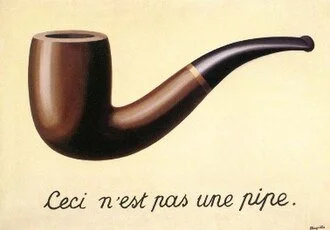
The Treachery of Images, 1929
Grant Wood
American, 1891–1942
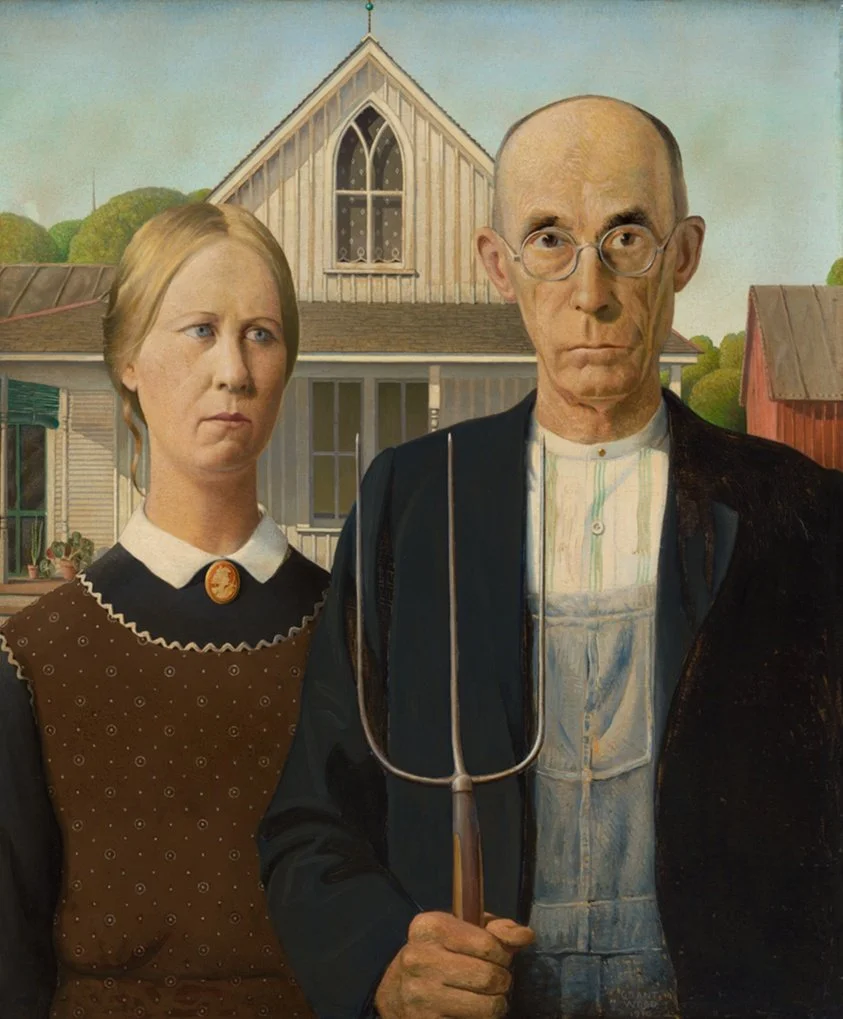
American Gothic, 1930
Oil on Beaver Board
Grant Wood was an American painter who was a key figure in the American Regionalism movement. This movement focused on depicting realistic scenes of American rural life, primarily rural life in the Midwest. American Regionalism arose in the 1930s as a reaction to the Great Depression. Other key artists of this movement include: Thomas Hart Benton and John Steuart Curry.
In American Gothic, Grant depicts a farmer and his daughter outside of their farmhouse. The farmhouse is built in the 1880s Carpenter Gothic style, which Grant had witnessed on a visit to Eldon, Iowa. The two figures, which were modeled by Grant’s daughter and dentist, are posed sternly. Grant leaves his exact perspective towards the figures ambigious as it is unclear if they are meant to be heroic or satirical representations of American rural life.
Pablo Picasso
Spanish, active France, 1881–1973
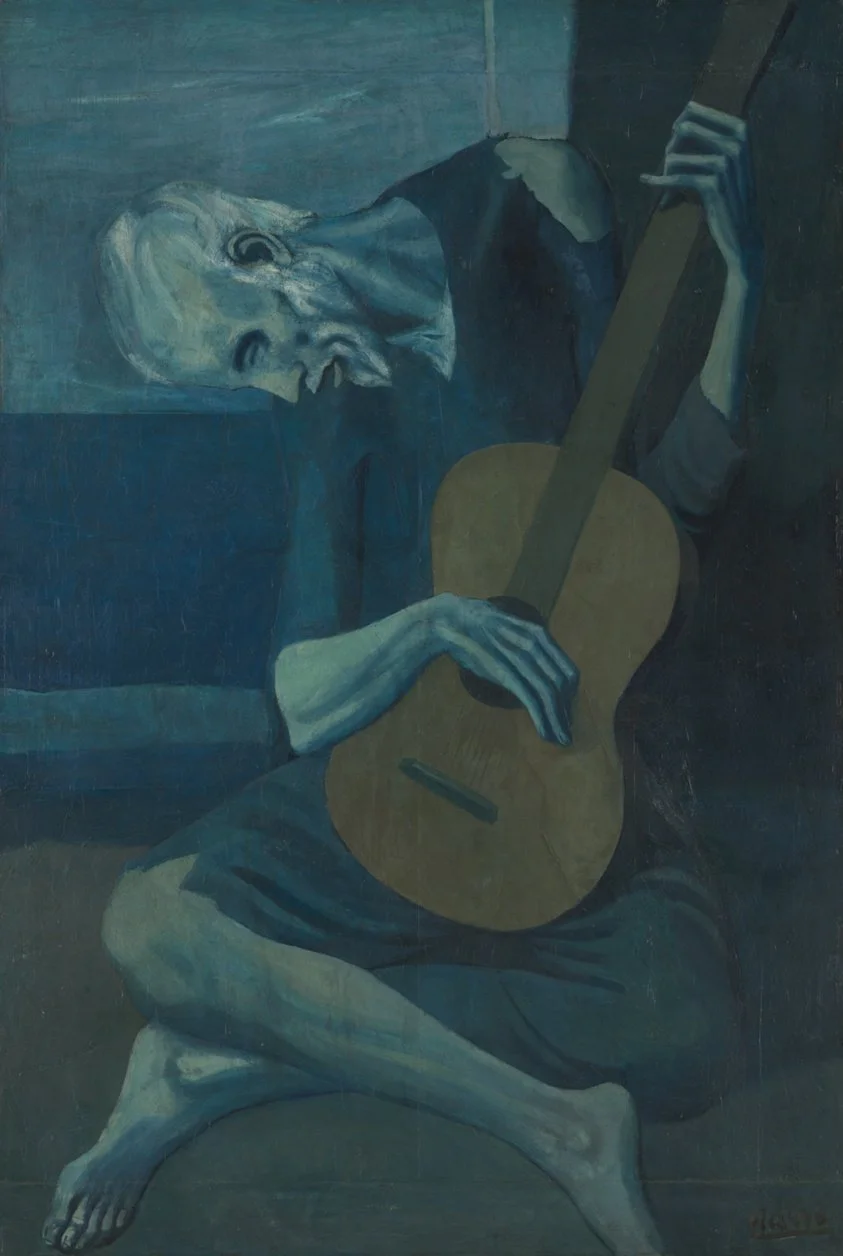
The Old Guitarist, late 1903-early 1904
Oil on Panel
Pablo Picasso was one of the most influential artists of the 20th century. He cofounded the Cubist art movement alongside Georges Braques. Cubism was an early 20th century avant-garde movement inspired by the scientific innovations of Albert Einstein, specifically his Theory of Relativity.
The Old Guitarist was created by Picasso in Barcelona during his Blue Period (1901-1904). During the Blue Period, Picasso limited himself to a blue monochromatic color palette and flattened figures. Picasso focused on psychological themes of human misery and alienation. Picasso’s rendering of the figure in the Old Guitarist, specifically the elongated and angular sense of the guitarist, was inspired by Spanish art, especially the works of 16th century artist El Greco.
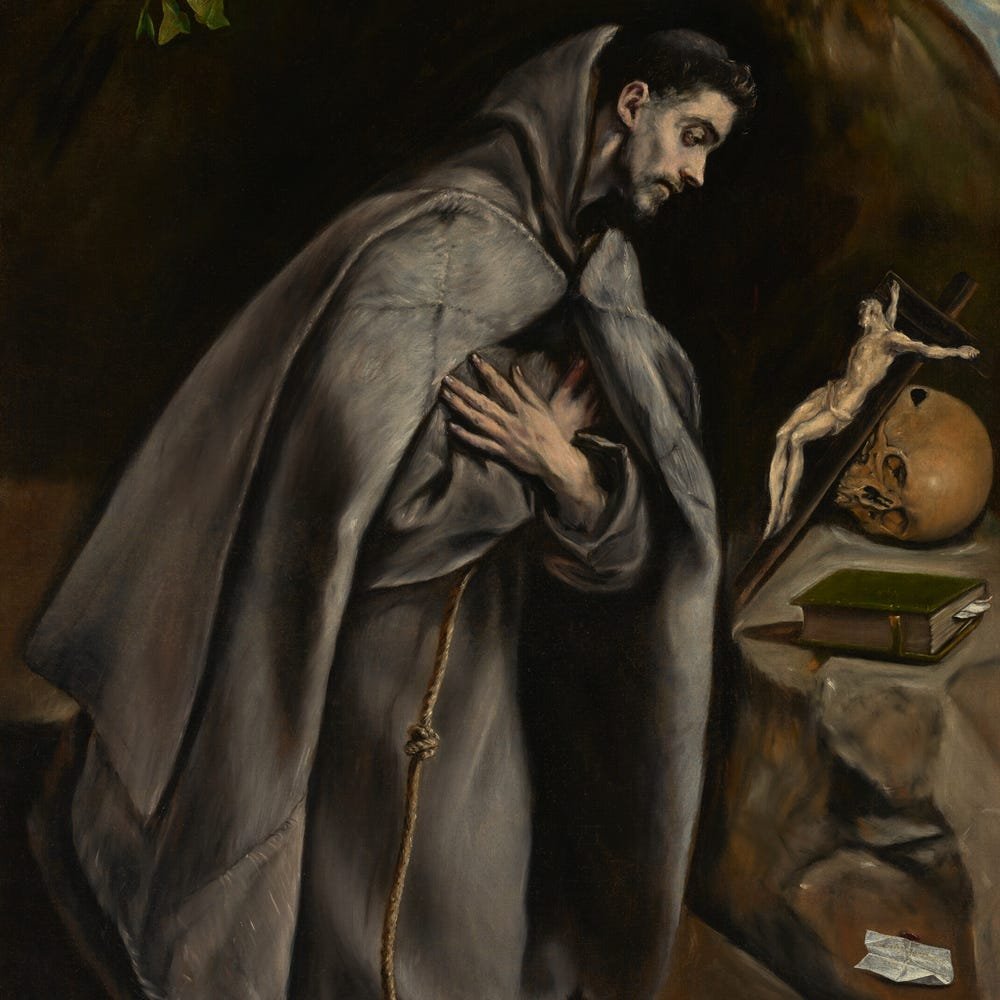
Saint Francis Venerating the Crucifix (ca. 1595) Domenikos Theotokopoulos (El Greco)
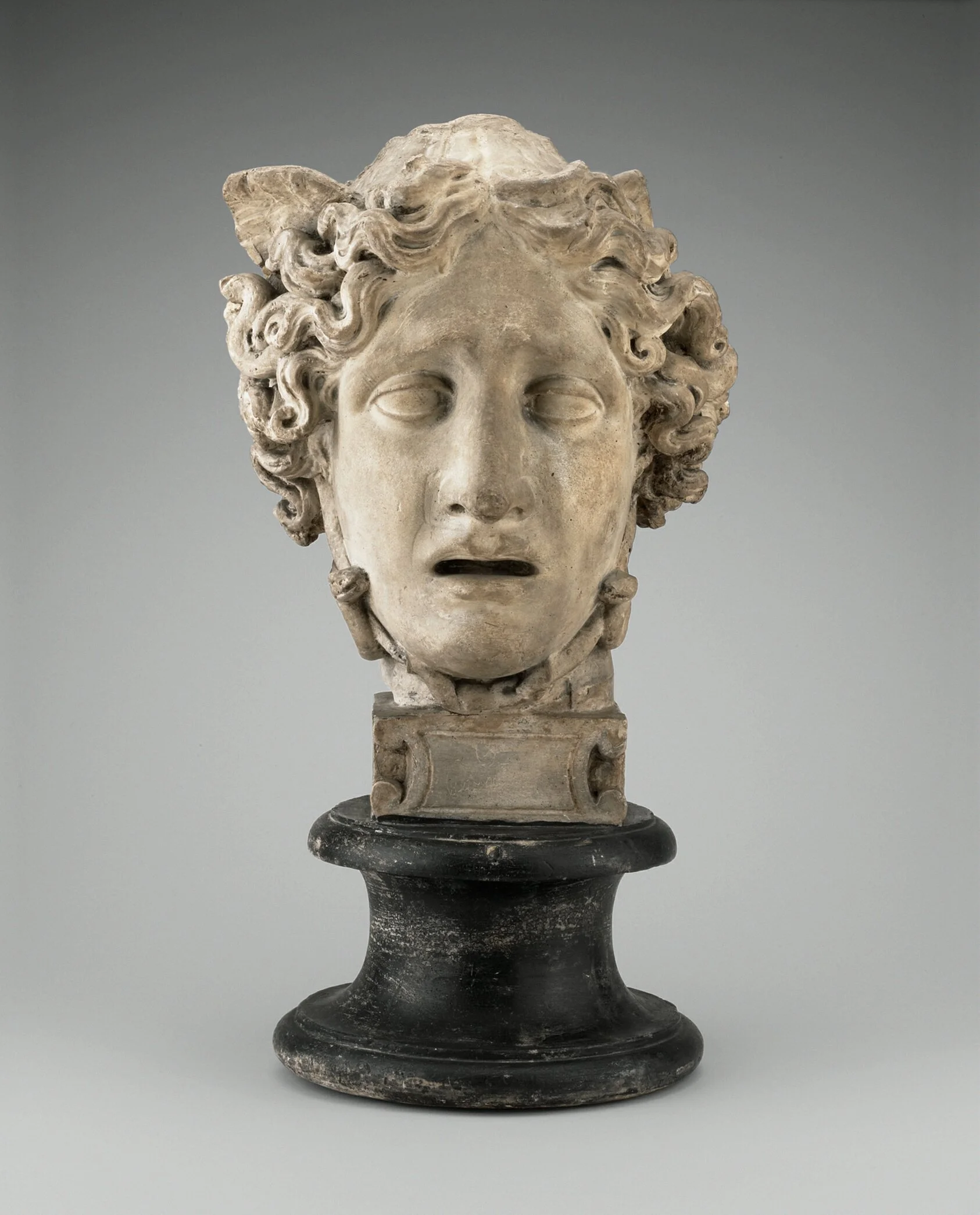
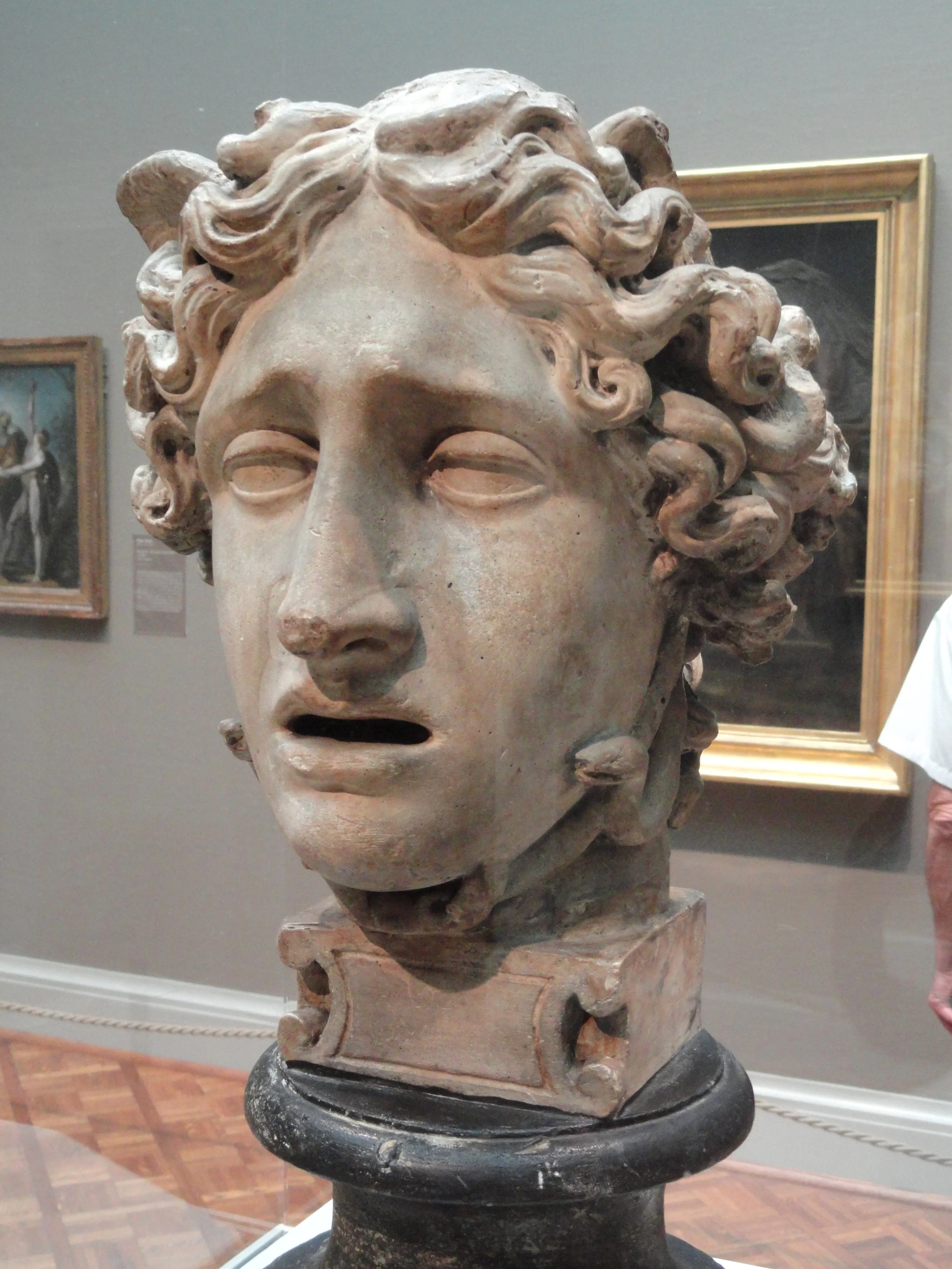
Antonio Canova
Italian, 1757–1822
Head of Medusa, 1801
Plaster
Antonio Canova was an important Neoclassical sculptor in Rome in the early 19th century.
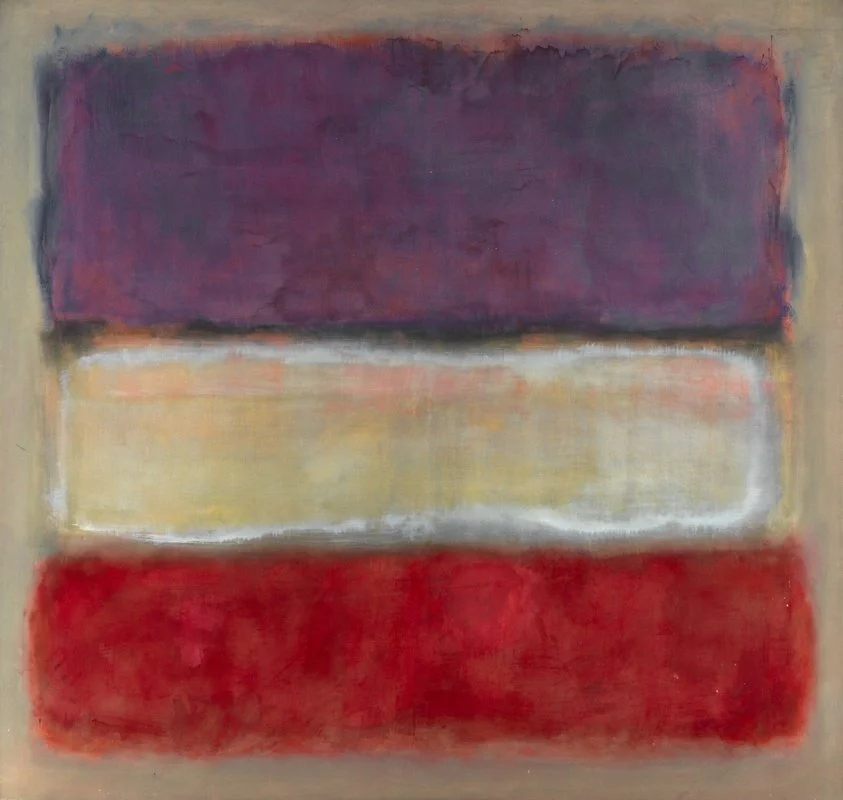
Mark Rothko (Marcus Rothkowitz)
American, born Russia (Latvia), 1903–1970
Untitled (Purple, White, and Red), 1953
Oil on Canvas
Description of Artwork
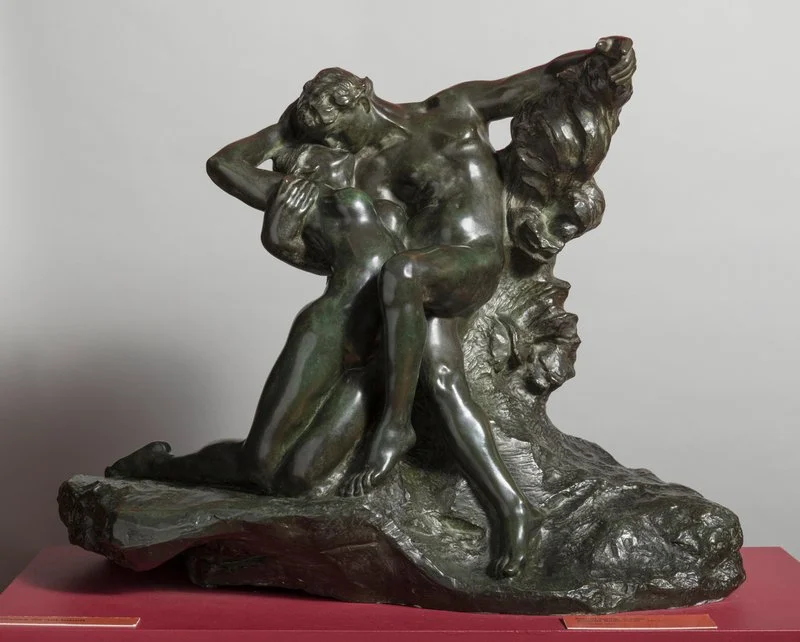
Auguste Rodin
French, 1840-1917
Eternal Springtime, modeled ca. 1881, carved 1907
Bronze
Description of Artwork
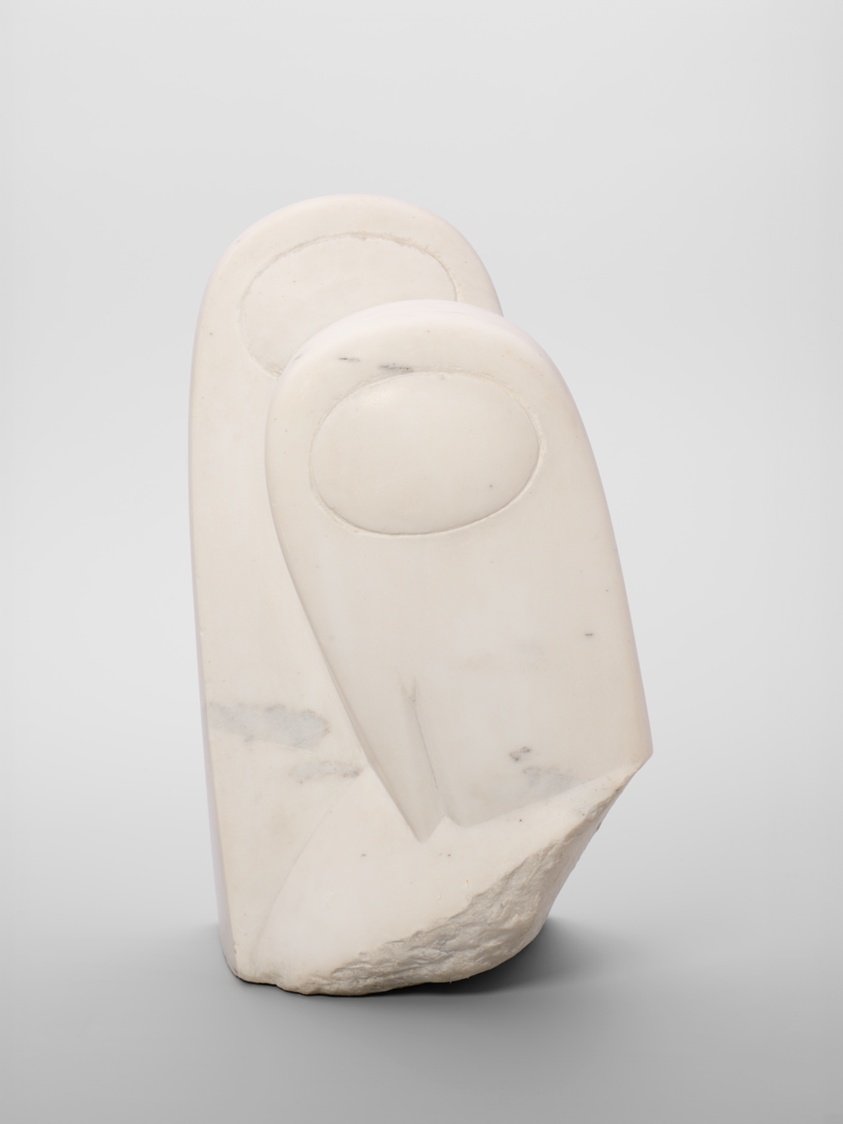
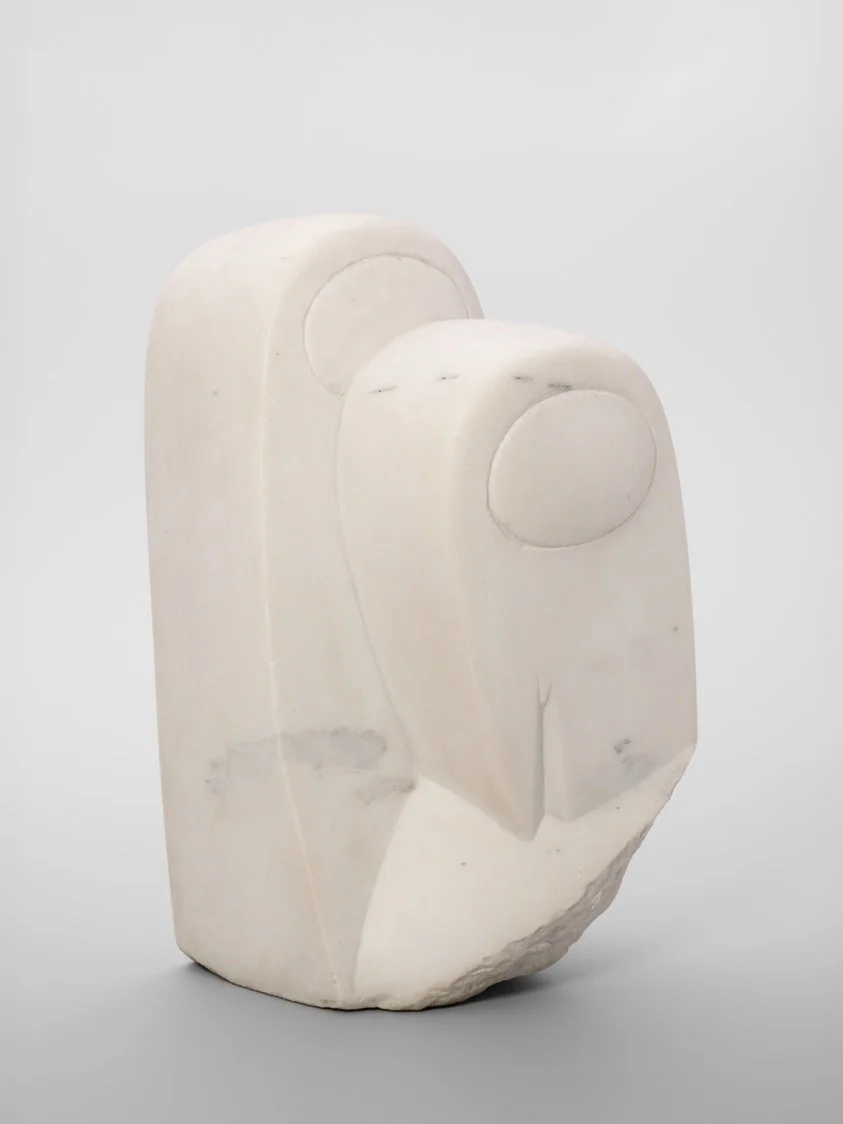
Constantin Brancusi
Romanian, active France, 1876–1957
Two Penguins, 1911-1914
Marble
Description of Artwork
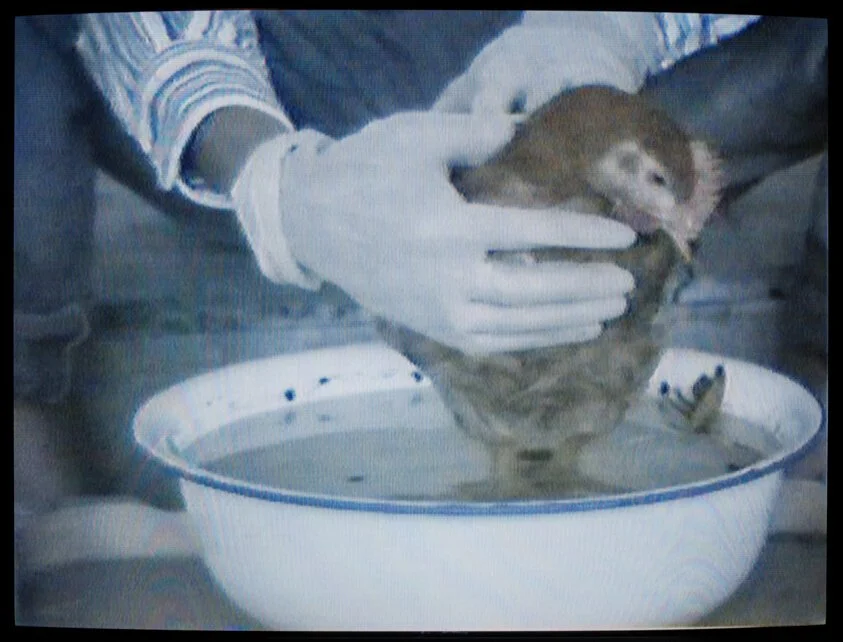
Zhang Peili
Chinese, born 1957
Document on Hygiene No. 3, 1991
Single-channel color video, silent
Description of Artwork
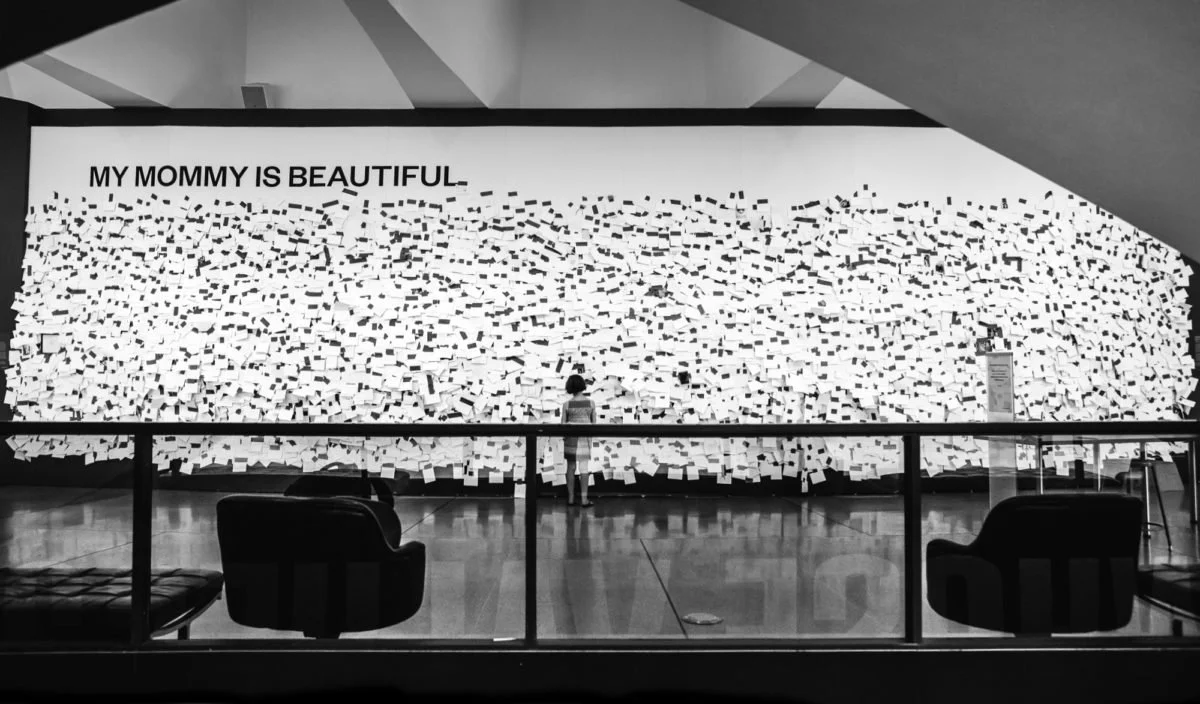
Yoko Ono
Japanese, born 1933
My Mommy is Beautiful, year created
Medium
Description of Artwork
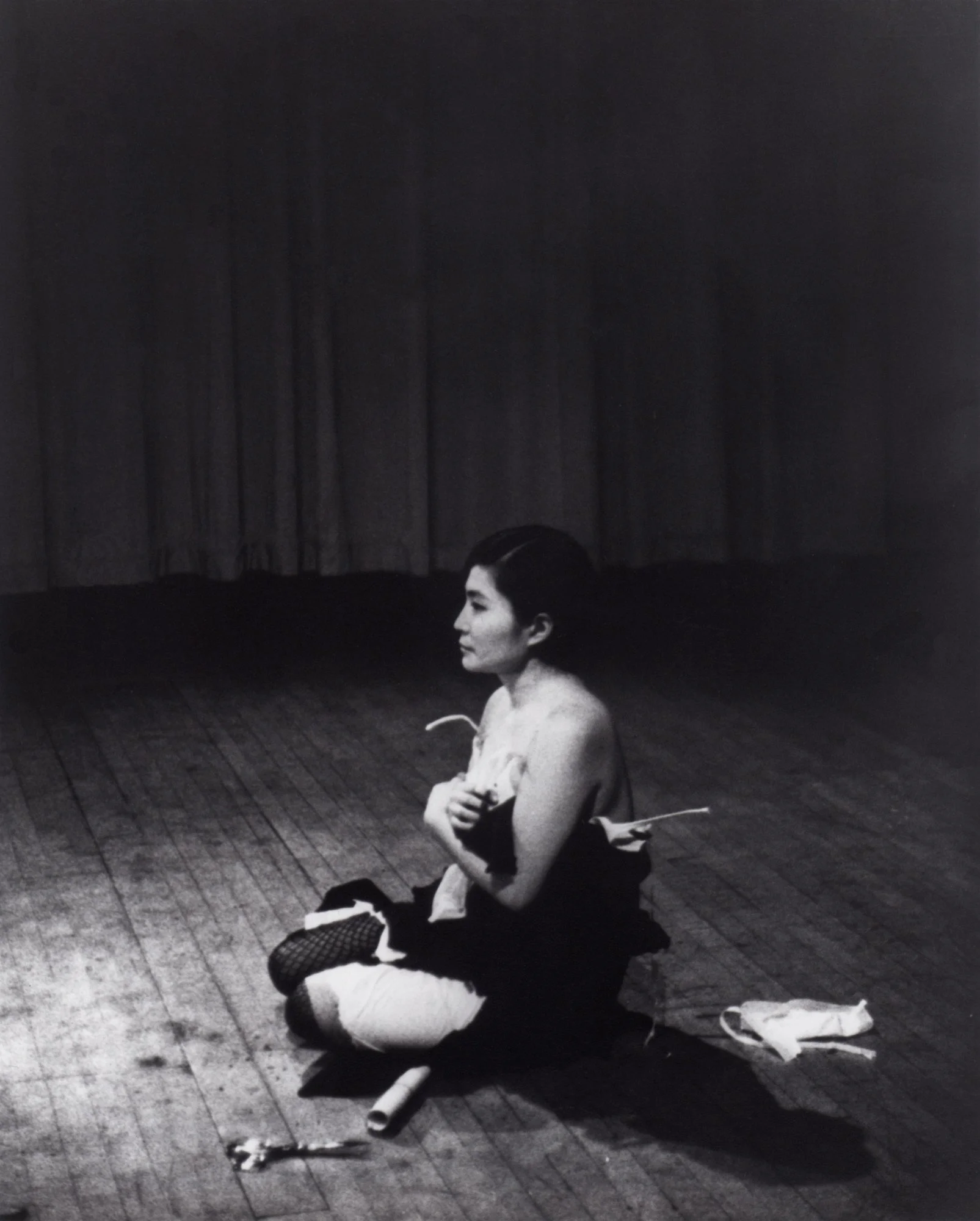
Yoko Ono
Japanese, born 1933
Cut Piece, 1964
Performance Art
performed by Yoko Ono in New Works of Yoko Ono, Carnegie Recital Hall, New York, March 21, 1965.
Description of Artwork
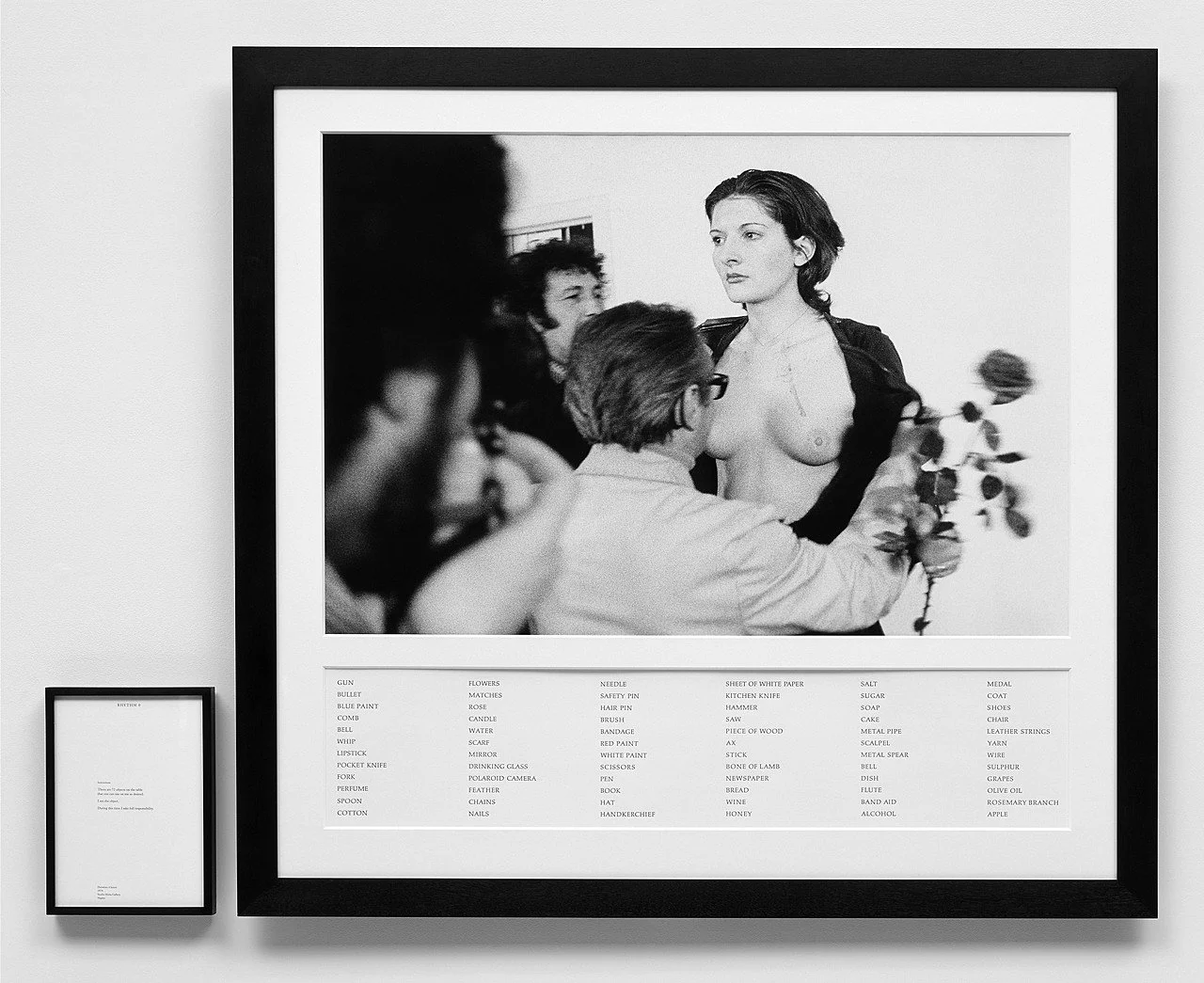
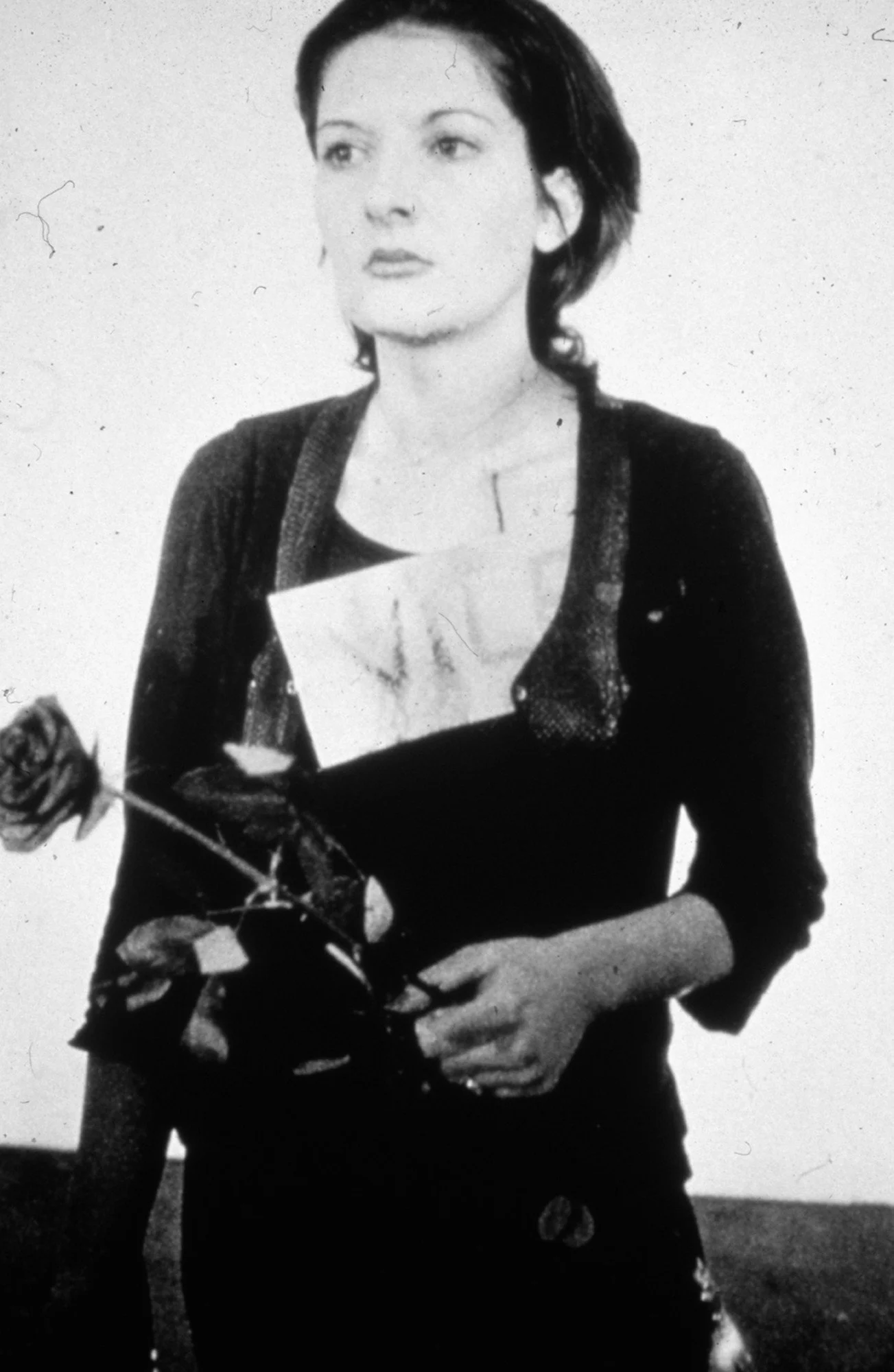
Marina Abramovic
Serbian, born 1946
Rhythm 0, 1974
Performance Art
In Rhythm 0, Abramovic invited audience members to do whatever they wanted to her. She provided the audience with 72 items including; a rose, perfume, scarf, candle, grapes, pen, scissors, chains, axe, and even a loaded pistol. The performance was stopped after 6 hours when audience members became too aggressive. A woman from the crowd grabbed the gun and placed it in Abramovic’s hand with her finger around the trigger, daring the artist to shoot herself. At this moment, guards seized the gun and ended the performance.
-
Description text goes here
-
Description text goes here
Glossary
-
Description text goes here
-
Description text goes here
-
Description text goes here
-
Description text goes here